
Why Does Solid Aluminum Conduct Electricity
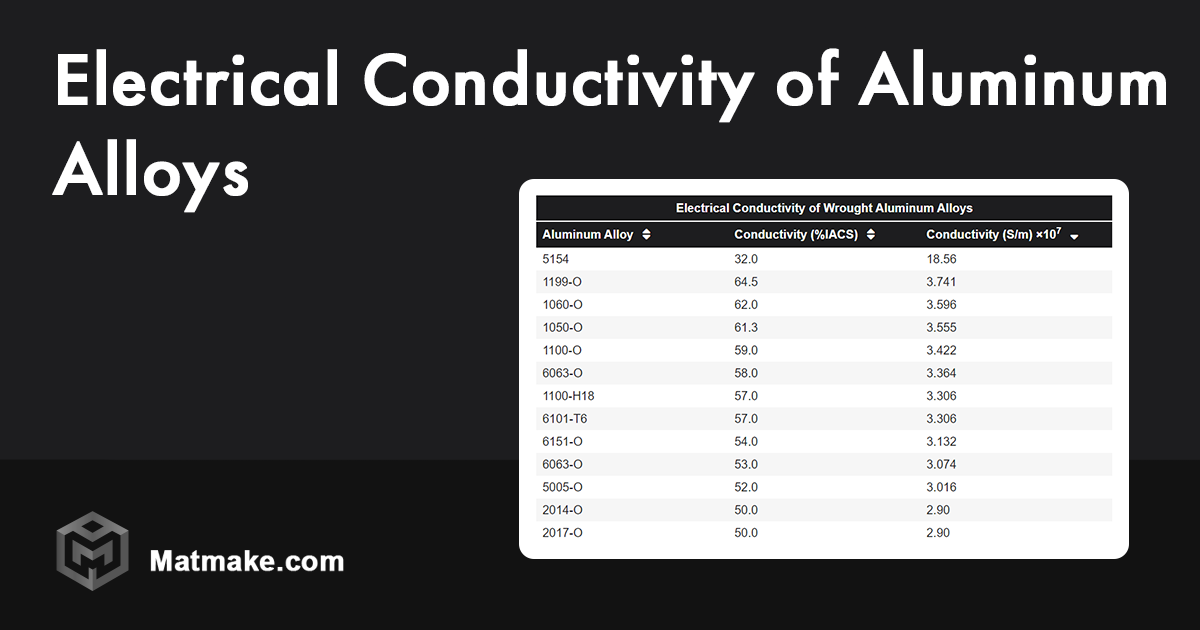
So, there I was, rummaging through my dad's old toolbox – you know, the one that smells perpetually of WD-40 and forgotten projects. I stumbled upon this ridiculously heavy, tarnished aluminum pot. My first thought? "Who on earth uses an aluminum pot anymore?" They're so… last century. Anyway, I was thinking about how easily it dented if you looked at it wrong, yet how it was somehow still… useful. Then my brain, in its usual circuitous way, pinged. Why is this thing, this soft, bendy metal, capable of carrying electricity? It seems so… illogical.
You see, we tend to think of electricity as this powerful, invisible force that zips through thick copper wires, powering our gadgets and making our lives… well, complicatedly convenient. Copper is the superstar, right? The undisputed champ of conductivity. But aluminum? It’s more like the quiet, unassuming cousin who can surprisingly hold their own in a pinch. And that's where the fun begins. Let's dive into the surprisingly electrifying world of aluminum, shall we?
The Astonishing Secret Life of Atoms (It's Not What You Think!)
Okay, so forget what you learned in grade school about atoms being these tiny solar systems with electrons orbiting the nucleus. That's a good starting point, a useful metaphor, but it’s a bit like saying a car is just a metal box with wheels. It’s true, but it misses so much of the juicy detail.
In reality, electrons are a bit more… squishy. They don't orbit in neat little circles. They exist in what scientists call "electron clouds" or "orbitals." Think of it more like a probability map. The electron is somewhere in this fuzzy region around the nucleus, and the denser the cloud, the more likely you are to find it there. Pretty wild, huh? Like trying to find your keys in a messy room – you know they're somewhere in the general vicinity, but pinpointing the exact spot is a challenge.
Now, the number of these electron clouds, and more importantly, the electrons in the outermost cloud (we call these the valence electrons), are the real key players when it comes to conductivity. These are the electrons that are furthest from the nucleus, feeling its pull the least. They're basically the rebels of the atomic world, itching to break free.
Aluminum's Open House Party for Electrons
This is where aluminum really shines, or rather, conducts. Every aluminum atom, in its natural state, has three valence electrons. Now, compare that to something like oxygen, which has six valence electrons and is desperately trying to grab more. Or even something like nitrogen, which has five and is also pretty grabby. Aluminum, on the other hand, is like the host of a party throwing open its doors and saying, "Come on in! Make yourselves at home!"
In a solid piece of aluminum, these atoms are packed together in a crystal lattice. Imagine a perfectly organized, super-dense Lego structure. Normally, each atom is trying to keep its own electrons close. But with aluminum, those three valence electrons per atom are just… loose cannons. They're not strongly bound to any single atom.

Instead, they become what's called a "sea of electrons." This is the absolute core of why metals conduct electricity. Think of it like this: all the aluminum atoms have donated their "extra" electrons to a communal pool. These electrons are free to roam throughout the entire metallic structure. They don't belong to just one atom; they belong to all of them. It's a true communist society for electrons, but in a good way!
This "sea of electrons" is incredibly important. It’s what allows for electrical conductivity, and also for another cool property of metals: thermal conductivity (how well they transfer heat). More on that later, perhaps, if you’re feeling brave enough for another deep dive!
The Electric Slide: How Electrons Get Moving
So, we've got this sea of free-roaming electrons in solid aluminum. That's great, but how does that actually become electricity? Well, imagine this sea of electrons as a crowded swimming pool. If everyone's just milling around, nothing much happens. But if you introduce a strong current, like a powerful water jet, things start moving!
When you apply an electrical voltage (think of it as an electrical "push" or "pressure") across a piece of aluminum, you're essentially creating an electric field. This field exerts a force on all those negatively charged electrons.
Suddenly, those free-roaming electrons, which were just kind of drifting randomly, start to get nudged in a specific direction. They don't all move at the same lightning speed – in fact, their average drift velocity is surprisingly slow, measured in millimeters per second. It’s more like a gentle, coordinated shuffle. But the effect of all those electrons moving in the same general direction is what we perceive as an electric current.

It's like a massive, synchronized domino effect. One electron gets pushed, it bumps into another, which bumps into another, and so on, all the way down the line. This coordinated movement of charged particles is, at its heart, electricity.
Why Aluminum Doesn't Always Beat Copper (But Still Rocks)
Now, I know what you're thinking: "If aluminum has all these free electrons, why isn't it better than copper?" And that's a fair question! Copper actually has one valence electron per atom, which is fewer than aluminum's three. So, why does copper typically win the conductivity race?
It's all about the ease with which those electrons can move. While aluminum has more free electrons, those electrons are in slightly tighter orbitals. Think of it as having a lot of traffic, but the roads are a bit narrow and winding. Copper, on the other hand, has fewer electrons, but they're in orbitals that are more spread out and less influenced by the nucleus. It's like having less traffic, but on wide, straight highways. The electrons can move through the copper lattice with less resistance.
This "resistance" is a key concept. It’s the opposition to the flow of electric current. A material with low resistance conducts electricity well. Both aluminum and copper have relatively low resistance compared to, say, a rubber band (which has virtually no free electrons and is an excellent insulator). But copper, generally, has even lower resistance than aluminum.

However, don't count aluminum out! It has some pretty amazing advantages that make it a fantastic choice for many applications. For starters, it's significantly lighter than copper. This is a huge deal in industries like aerospace and even in power transmission lines where weight is a major concern. Also, aluminum is generally much cheaper than copper. So, for many large-scale applications where a slight decrease in conductivity can be compensated for by using a larger wire, aluminum becomes the more economical and practical choice.
The Aluminum Oxide Shield: A Protective (and Sometimes Annoying) Layer
Here's another cool, and sometimes frustrating, thing about aluminum. As soon as it's exposed to oxygen – which, let's face it, is everywhere – it forms a very thin, tough layer of aluminum oxide on its surface. This layer is incredibly stable and acts as a protective barrier.
On the one hand, this oxide layer is amazing! It’s why your aluminum pot doesn't instantly corrode into a powdery mess like some other metals might. It’s what makes aluminum so resistant to corrosion in general. This self-passivating property is a massive advantage.
But on the other hand… this oxide layer is an electrical insulator. Uh oh. Remember how we said the free electrons in the aluminum metal are key? Well, that oxide layer is like a little insulating blanket thrown over them. This means that if you’re trying to make an electrical connection to aluminum, you need to make sure you scrape off or somehow break through that oxide layer to ensure good contact with the conductive metal underneath.
This is why you often see special cleaning compounds or abrading techniques used when making electrical connections with aluminum wires. It’s a crucial step that many beginners overlook, leading to… well, let's just say unreliable connections and a lot of head-scratching. It’s like trying to have a conversation with someone through a thick glass wall – the message might get through eventually, but it’s not going to be clear or efficient!
Aluminum in Our Lives: More Than Just Pots and Pans
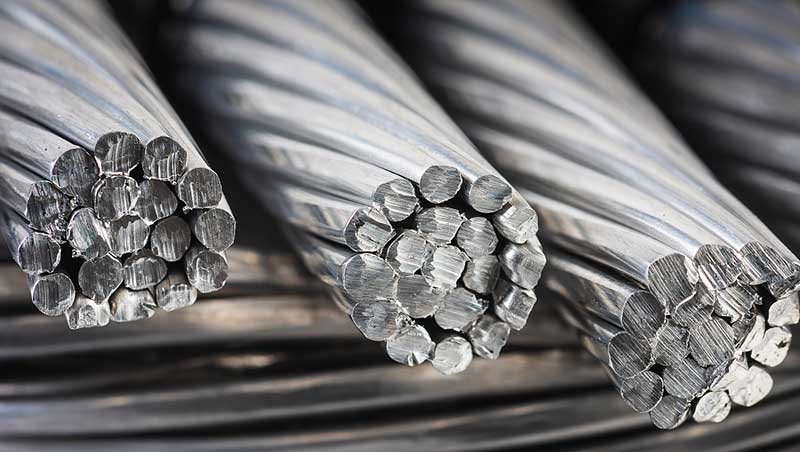
So, this whole "sea of electrons" business isn't just some abstract scientific concept. It has real-world implications that affect our daily lives. Think about those massive power lines that crisscross the country. Many of them are actually made of aluminum, or a composite material with an aluminum core. Why? Because of its lightweight and good conductivity, it allows for longer spans between towers, reducing the number of support structures needed, and the overall cost of transmitting electricity over long distances.
And in your car? There are tons of aluminum components, not just for weight savings, but also for things like heat sinks and electrical housings where its conductivity is beneficial. Even in your smartphone, while copper is king for its intricate circuitry, aluminum plays roles in things like the chassis and internal components. It’s the silent workhorse, the unsung hero of conductivity in many situations.
It’s fascinating, isn't it? This seemingly simple metal, so easily shaped and so readily available, owes its electrical prowess to the quirky behavior of its electrons. Those three little rebels in the outer shell of every aluminum atom are the true stars of the show, making sure the lights stay on, the internet keeps flowing, and yes, even that old pot on the stove can, in theory, conduct electricity.
The Takeaway: It's All About Those Loose Electrons!
So, to wrap it all up, why does solid aluminum conduct electricity? It’s because of its atomic structure. Each aluminum atom has three valence electrons that are not strongly bound to any single atom. In solid aluminum, these electrons form a mobile "sea of electrons" that can move freely throughout the metal's structure. When an electrical voltage is applied, these free electrons are nudged into a directional flow, creating an electric current.
It's not the most conductive metal out there, but its combination of decent conductivity, lightness, affordability, and corrosion resistance makes it an incredibly important material in a vast array of technologies. Next time you see an aluminum can, a power line, or even that dusty old pot, give a little nod to those tiny, energetic electrons doing their thing. They’re the real reason it all works!