
Why Don't The Other Cyclopes Help Polyphemus
You know, I was staring at my half-eaten bowl of cereal the other day, contemplating the mysteries of the universe – you know, the usual. Suddenly, my cat, Bartholomew, who has the emotional range of a particularly grumpy rock, let out a yowl that sounded suspiciously like he’d stubbed his toe. And it got me thinking. If Bartholomew were, say, a giant, one-eyed monster trapped in a cave, would his brothers come running?
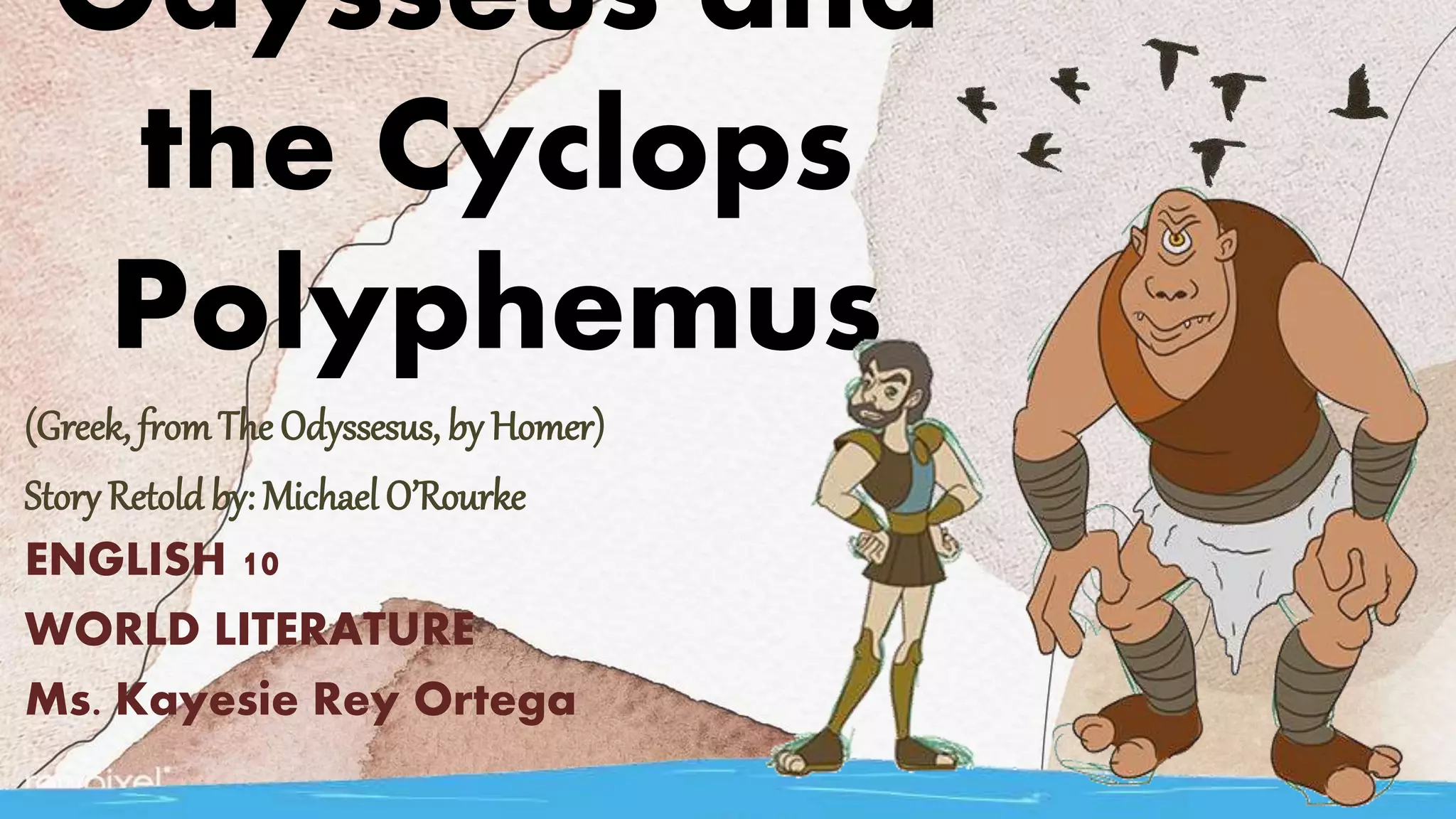
This, my friends, is where we dive headfirst into the absolutely bonkers world of Greek mythology, specifically the tale of Odysseus and the rather unfortunate Cyclops, Polyphemus. Because honestly, the lack of sibling support in that story is kind of baffling, isn’t it?
The Big, Bad, and Utterly Alone Cyclops
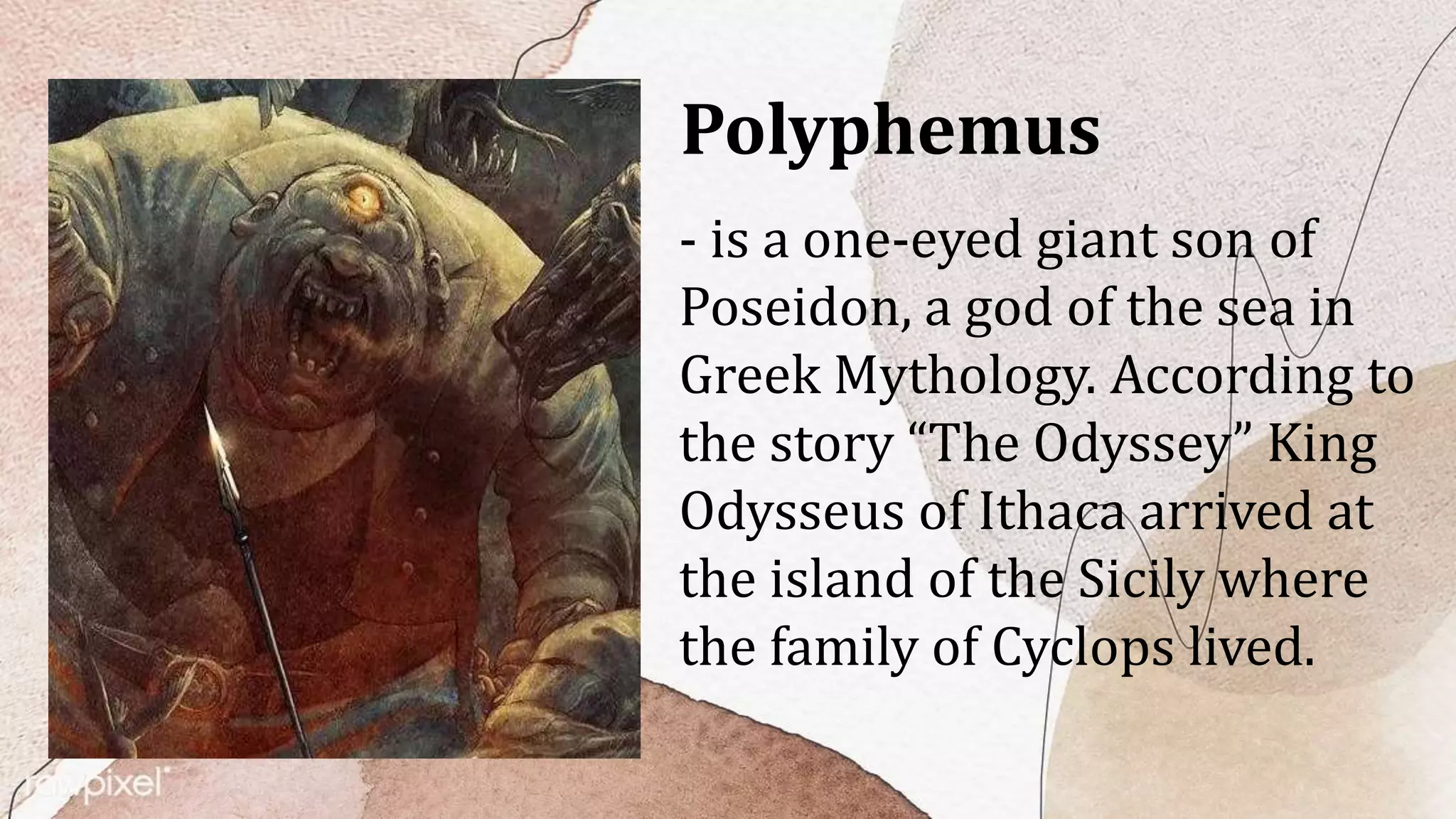
So, picture this: Odysseus and his crew are in a bit of a pickle. They’ve landed on an island, probably thinking, “Ooh, vacation spot!” and then they stumble upon a cave. Smart move, guys. Inside, they find… well, a lot of cheese. And, oh yeah, a giant, one-eyed shepherd named Polyphemus. Oops.
Now, Polyphemus isn't exactly known for his hospitality. He’s more of a “trap you in my cave and eat you” kind of guy. And he does just that. He seals Odysseus and his men in his cave with a massive boulder and proceeds to have them for dinner. Not exactly the five-star dining experience you’d expect, right?
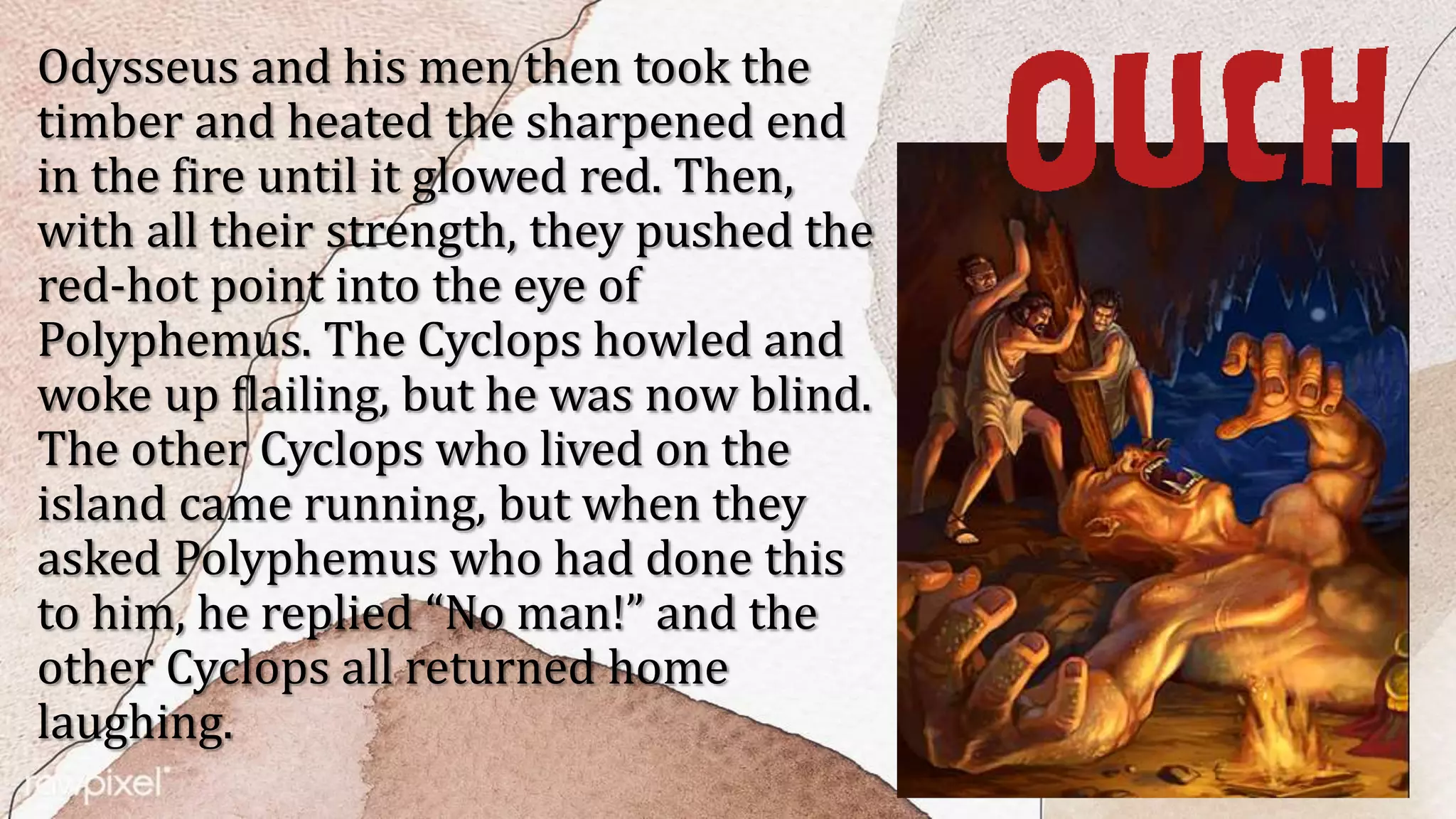
Then comes Odysseus’s brilliant plan. He gets Polyphemus drunk on some super-potent wine (because, apparently, even giants have a weakness for a good tipple) and tells him his name is "Nobody." Then, while Polyphemus is passed out, Odysseus and his remaining men blind him with a sharpened, heated stake. Ouch.
When Polyphemus, in agonizing pain, bellows for help, this is where the plot thickens, or rather, doesn’t. He cries out, “Nobody is hurting me! Nobody is killing me!” And what do his neighbors, the other Cyclopes, do?
Absolutely. Nothing.
The Silence of the Giants: What Gives?
This is the part that always gets me. Why, in the name of Zeus’s beard, do none of the other Cyclopes bother to investigate? I mean, you’d think a giant, one-eyed creature screaming bloody murder would warrant at least a quick peek over the fence, wouldn’t you? It’s like shouting “Fire!” in a crowded theater, and everyone just keeps scrolling through their phones.
Let’s break down some of the highly scientific theories I’ve conjured while staring at Bartholomew. (You thought I forgot about him, didn’t you? Never.)
Theory 1: The "Nobody's Home" Defense
This is the most obvious, and arguably the most ironic, reason. Polyphemus, in his drunken, pain-fueled state, literally tells them nobody is hurting him. And because giants aren't exactly known for their advanced deductive reasoning skills (they're more into the whole "smash and eat" method), they take him at his word. “Oh, nobody’s hurting him? Good to know. Carry on.”

Imagine the conversation from the outside:
Cyclops 1: “Did you hear that? Polyphemus is making a racket.”
Cyclops 2: “Yeah, sounds like he’s having a rough night.”
Cyclops 1: “He’s shouting for help.”
Cyclops 2: “But he said nobody is hurting him.”
Cyclops 1: “Right. So, no problem then. I was just about to start on this delicious pile of sheep.”
Cyclops 2: “Excellent idea. Cheers.”
It’s almost too simple, isn’t it? It’s a linguistic loophole, a word game that saves Odysseus’s skin. And honestly, it’s genius. Brilliantly simple, and completely dependent on the fact that these giants aren't exactly Einsteins.
Theory 2: The "Mind Your Own Business" Mentality
Let’s be real, the Cyclopes weren't exactly the warmest, fuzzies of mythological creatures. They were a race of solitary, often brutish giants who lived in caves and, you know, ate people. Was there a strong sense of community or neighborly obligation?
I’m going to go out on a limb here and say… probably not.
Think about it. These guys were massive, powerful beings. They likely operated on a principle of “every Cyclops for himself.” If Polyphemus was having trouble, well, that’s his trouble. Maybe he shouldn’t have eaten so many sailors and pissed off so many gods (looking at you, Poseidon).
It’s the mythological equivalent of a shrug. “Sucks to be you, Polyphemus. Hope you sort it out.” It speaks to a certain rugged individualism, albeit the kind that involves a lot of roaring and occasionally consuming your own kind.
Theory 3: The "Too Much Effort" Excuse
Okay, this one is a bit more tongue-in-cheek, but hear me out. Imagine you’re a giant. Your daily routine probably involves a lot of sleeping, a lot of eating, and a lot of staring blankly at the horizon. Now, imagine you hear your neighbor bellowing. What’s the first thing you think?
“Ugh, do I have to get up?”
Moving a boulder the size of a small house? That sounds like work. And let’s be honest, are the other Cyclopes depicted as particularly motivated individuals? Not really. They’re more about primal needs. Helping a neighbor might require exerting energy, and if you can avoid that, why wouldn't you?
Plus, who knows what kind of scene would greet them? It could be messy. They might have to deal with things. And frankly, a nice nap sounds a lot more appealing than investigating a potentially complicated situation involving a blinded, enraged giant and some tiny, annoying humans.
Theory 4: The "He Had It Coming" Vindication
This is where we get a little judgy, but hey, mythology isn’t exactly known for its sugar-coating. Polyphemus was a dick. Let’s just call it what it is. He trapped Odysseus and his men, he ate some of them, and he was generally a nasty piece of work.
Perhaps the other Cyclopes, if they even bothered to think about it, figured Polyphemus was just getting his comeuppance. Maybe they’d even heard tales of his cruelty and thought, “Serves him right.”
It’s the cosmic justice angle. Odysseus, while not exactly innocent himself, delivered a dose of karma to a creature who was clearly abusing his power. The other Cyclopes might have seen it as a natural consequence, a bit of brutal cosmic balance. No need to intervene if the universe is already handling the cleanup.
Theory 5: The "They're Not That Close" Reality Check
We often assume that just because people share a race or a species, they’re automatically best friends. But that’s not always true, even with giants. The Cyclopes in Homer’s Odyssey aren’t depicted as a close-knit family. They’re more like a collection of individuals who happen to live in the same general geographical area.
Think of it like a neighborhood. You know your neighbors exist, you might nod to them, but are you going to rush over every time they have a minor inconvenience? Probably not.

Polyphemus was an outlier. He lived on his own, his brothers lived on their own. They probably didn't hang out for game nights or discuss the weather. Odysseus exploiting this lack of interconnectedness was a stroke of strategic genius.
The Bigger Picture: A Commentary on Isolation?
Beyond the specific (and hilarious) reasons, the whole situation with Polyphemus and his silent brethren can be seen as a broader commentary. The Cyclopes, as a race, are often portrayed as isolated, primitive, and lacking in complex social structures. Their inability (or unwillingness) to help Polyphemus reinforces this image.
It highlights the perils of isolation. When you’re a solitary giant, there’s no one to watch your back, no one to help when you’re in trouble. Odysseus, on the other hand, is a master of utilizing his crew, even the ones he’s tricked into following him. He builds alliances, he inspires loyalty (and sometimes terror), and he leverages his network. Polyphemus has… a lot of cheese.
And honestly, it makes Odysseus seem even more cunning. He didn't just outsmart a giant; he outsmarted an entire culture (if you can call it that) of isolated beings. He played on their lack of solidarity, their self-interest, and their inherent laziness. That’s some next-level strategic thinking right there.
So, What's the Takeaway?
The next time you hear a neighbor doing something questionable, or you see someone in need, maybe think of Polyphemus. And then, maybe, just maybe, consider offering a hand. Or, you know, at least shouting to see if they’re okay.
Because even if they are a grumpy, one-eyed giant who probably deserves it, a little bit of help can go a long way. Or at least, it would have gone a long way for Polyphemus. He really could have used a buddy to help him move that boulder. And maybe offer him some eye drops.
And Bartholomew? He just wants his breakfast. Some mysteries are best left unsolved, I guess.