
Why Is It Possible For Steel Boats To Float

Alright, settle in, grab your ridiculously overpriced latte, and let me tell you a story. A story that will make you question everything you thought you knew about, well, floating. We’re talking about boats. Big, honking, metal boats. And no, this isn't a conspiracy theory involving invisible buoyancy aids or a secret pact with mermaids. It’s all about science, folks. Science that’s so cool, it might just make you forget about your crippling student loan debt for a solid five minutes.
So, picture this: you’re at the docks, right? You see these colossal behemoths, these steel galleons, these… well, these really big boats. And your brain, bless its little logical heart, is screaming, "BUT IT’S STEEL! STEEL SINKS! Like a rock! Like my hopes and dreams after seeing the price of avocado toast!" And you’re not wrong, per se. A solid chunk of steel, dropped into the ocean? It’s going straight to Davy Jones’ locker, probably with a dramatic sigh and a tiny “whoopsie” as it plummets.
But here’s the kicker, the plot twist, the reason why your barista might be secretly a naval architect (or just really good at explaining complex things with milk foam): it’s not just the steel itself. It’s how the steel is arranged. Think of it like baking. You can have all the ingredients for a magnificent cake, but if you just throw them all in a bowl and hope for the best, you’re going to end up with… well, something that definitely doesn’t float.
This is where we get to introduce our star player, the unsung hero of maritime mishaps and successful voyages alike: Archimedes’ Principle. Don't worry, it’s not some fancy-pants philosophical mumbo jumbo. It’s actually super straightforward. The principle states that any object, wholly or partially submerged in a fluid, is buoyed up by a force equal to the weight of the fluid displaced by the object.
Let’s break that down. Imagine you have a big, empty bathtub. You get in, right? And suddenly, the water level rises. That’s because your body is displacing water. You’re pushing it out of the way. Archimedes, a guy who probably had a lot of time on his hands and a serious penchant for physics (and possibly running naked through the streets yelling “Eureka!”), figured out that the water pushing back up on you is exactly the same weight as the water you just pushed out of the way. Mind. Blown.
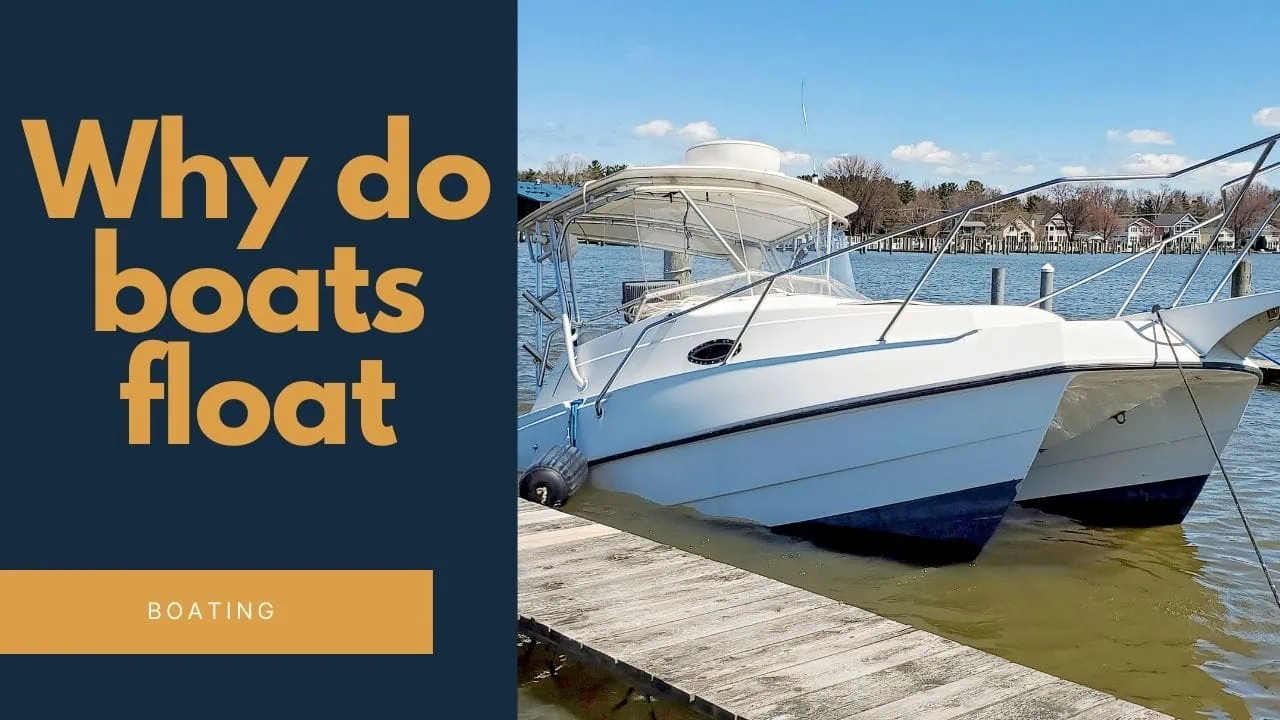
Now, let’s apply this to our steel boat. Instead of a solid block of steel, which is super dense (meaning a lot of mass in a small space), we have a hollow shell. It’s like a giant, metal bowl. This bowl is designed to displace a massive amount of water. Think about it: the inside of the boat is filled with… air! And air, my friends, is remarkably light.
So, while the steel itself is heavy, the overall density of the boat – steel plus all that empty air inside – is much, much less than the density of the water it’s displacing. It’s like comparing a single, dense pebble to a giant, inflated beach ball. The beach ball, despite being made of lightweight plastic, takes up a huge amount of space and pushes aside a lot of air. The pebble, dense and small, barely makes a dent.
Here’s where the playful exaggeration comes in: Imagine you took a tiny thimbleful of water and tried to lift it. Easy peasy, right? Now imagine you had a whole swimming pool of water. That’s a LOT of weight. A steel boat, by its very design, is shaped to push aside that much water. The force of the water pushing up on the hull is so immense, it’s more than enough to counteract the weight of the steel and everything inside the boat. It’s like the ocean is giving the boat a giant, supportive hug.
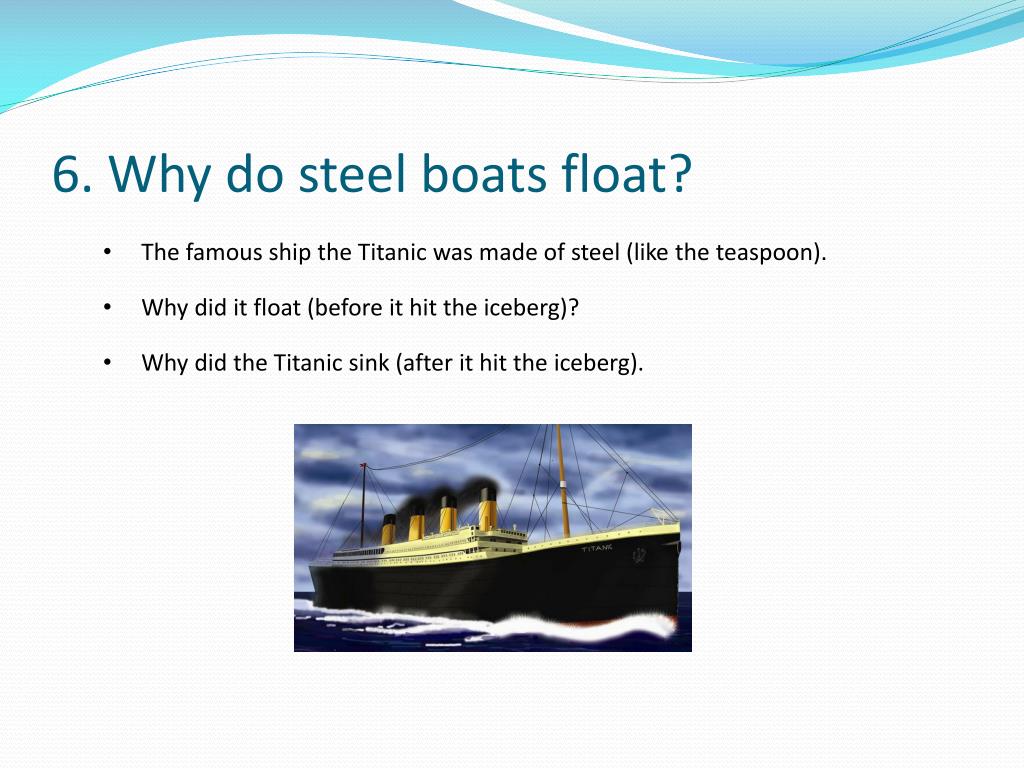
Think of it this way: If you took a steel nail and dropped it in water, it sinks. But if you took that same amount of steel and hammered it into a thin, hollow, bowl shape, it would likely float. The volume of air it encloses is key. It’s all about the average density. This is why you can have a massive cargo ship, heavier than a hundred elephants (and probably smelling worse), gliding effortlessly across the waves.
The shape of the hull is crucial. It’s designed to maximize the volume of water displaced for its weight. It’s not just a random piece of metal; it’s a carefully engineered floating marvel. Naval architects are basically wizards who can convince metal to defy gravity. They calculate precisely how much water needs to be pushed aside to keep the ship afloat, ensuring the boat’s total weight is less than the weight of the water it displaces.

And here’s a surprising fact that might make your jaw drop: a fully loaded supertanker, capable of carrying millions of gallons of oil (enough to… well, you get the idea), can actually be lighter than the amount of water it displaces. Yes, you read that right. The ship’s displacement is more than its weight. It’s pure buoyancy magic, powered by clever engineering and the unyielding laws of physics.
So, the next time you see a massive steel ship sailing by, don’t think of it as a heavy object trying to drown. Think of it as a cleverly shaped container, filled with mostly air, that’s so good at pushing water out of the way, the ocean just can’t help but lift it up. It’s a testament to human ingenuity and the fact that sometimes, the most solid-seeming things can be surprisingly buoyant, especially when they’re designed with a little bit of… empty space.
It's all about that displacement, baby! And maybe a little bit of wishful thinking on the part of the ship's designer. But mostly, it's science. And science, unlike that experimental kale smoothie you tried last week, actually works. Pretty neat, huh?