
X Ray Tube Components And Function
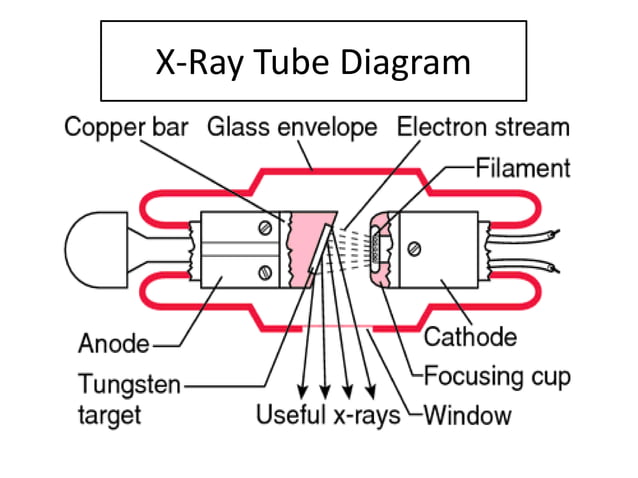
Alright, settle in, grab your metaphorical (or actual, I won't judge) coffee, because we're about to dive into the fascinating, slightly spooky world of the X-ray tube. Think of it as the unsung hero of the doctor's office, the reason you get those cool, ghostly images of your insides. And honestly, it’s a lot more exciting than it sounds, like a tiny, controlled lightning storm with a purpose.
So, what is this magical gizmo? Imagine a fancy light bulb, but instead of making things visible, it makes the invisible visible. It’s basically a vacuum-sealed glass chamber, which sounds pretty straightforward, right? But inside this glass house, things get… electrifying. Literally.
The Main Players in This High-Tech Drama
Every good drama needs characters, and our X-ray tube is no exception. We’ve got a few key players that make the whole operation happen. First up, the rockstar of the show: the cathode. Think of this as the grumpy old man of the tube, just sitting there, being all negative and ready to unleash some serious electron fury.
The cathode is usually made of a special metal filament, much like the one in an old-fashioned incandescent light bulb. And just like that old light bulb, when you zap it with electricity, it gets hot. Not just "oh, I left the oven on" hot, but "might want to wear oven mitts to touch it" hot. This intense heat is crucial, because it causes something amazing to happen: thermionic emission.
Don't let the fancy name scare you. Thermionic emission is just a fancy way of saying that when things get super, super hot, they start shedding tiny particles. In this case, those particles are electrons. It’s like the filament is throwing an electron party and they’re all jumping off into the void. These little guys are the main ammo for our X-ray tube.
Enter the Hero: The Anode
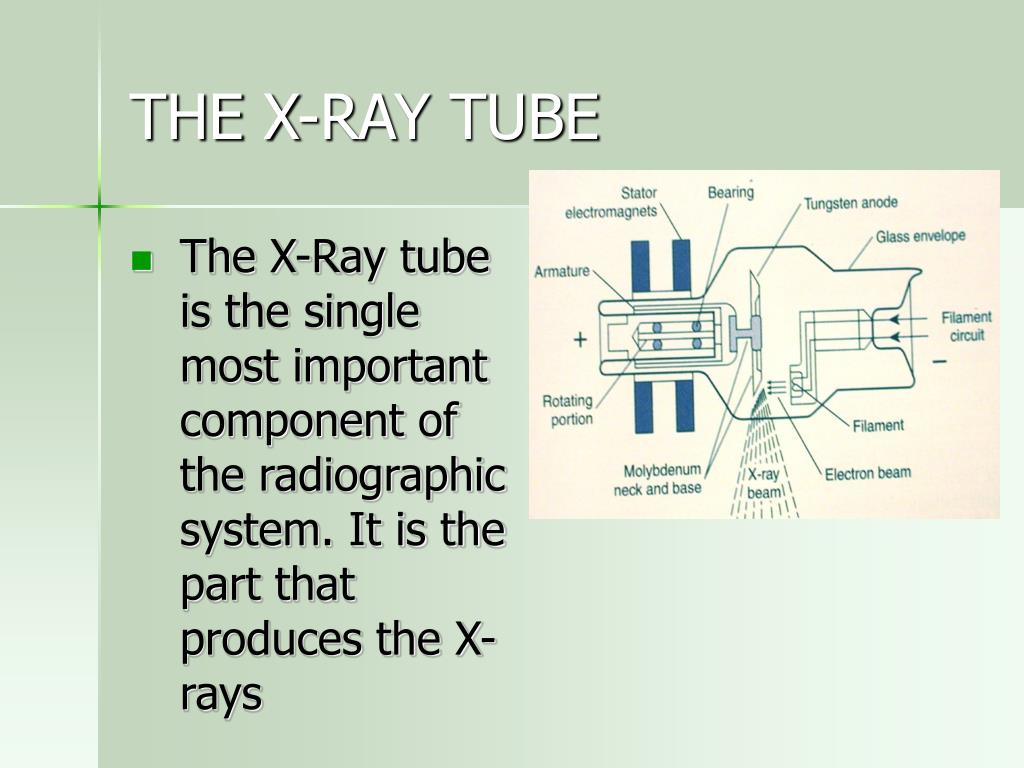
Now, you can’t have a negative party without someone to chase. Enter the anode! This is the cheerful, positively charged counterpart to our grumpy cathode. It's basically a giant magnet for those rebellious electrons. The anode is usually made of a dense metal, like tungsten, which can handle a serious pounding.
Think of the anode as the target. The electrons, already pumped up from their fiery departure from the cathode, are then accelerated across the vacuum chamber by a massive electrical voltage. We’re talking hundreds of thousands of volts here! It’s like a tiny, super-powered slingshot launching those electrons with incredible speed and force.
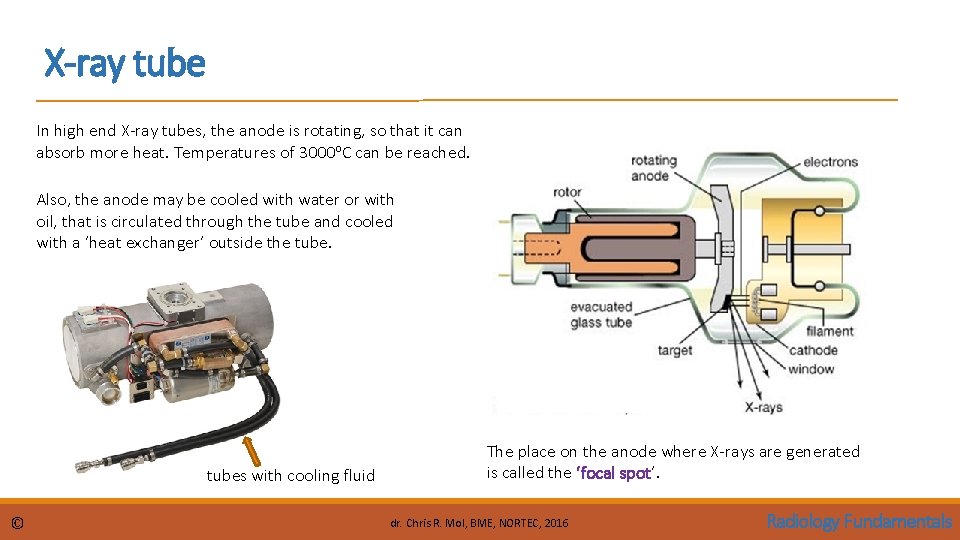
When these high-speed electrons slam into the anode target – BAM! – something spectacular happens. Most of the energy from the collision is converted into heat. Seriously, like 99% of it. This is why those anode targets are built to withstand extreme temperatures; otherwise, they’d melt faster than an ice cream cone on a summer day. The X-ray tube is basically a high-tech barbecue, but instead of cooking burgers, it’s cooking up something much more exciting.
The Magic Ingredient: X-Rays!
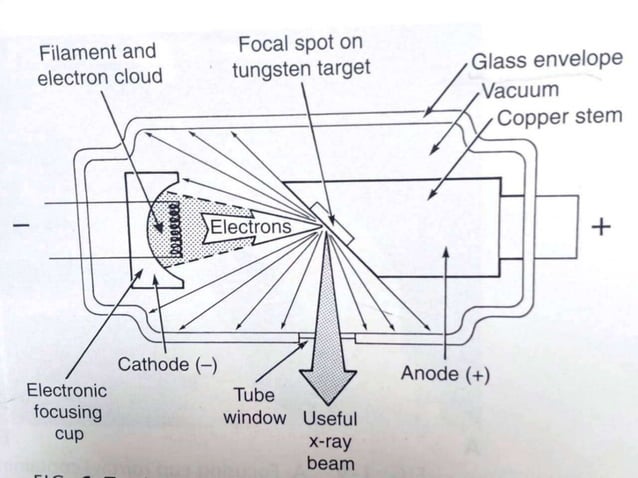
But here’s the really cool part, the 1% that makes all the heat worth it. A tiny fraction of the energy from the electron collision isn't turned into heat, but into X-rays. Ta-da! These X-rays are a form of electromagnetic radiation, similar to light, but with way more punch. They can pass through soft tissues like our skin and muscles, but get stopped or slowed down by denser materials like bones.
So, when the X-ray tube fires its electron barrage at the anode, it’s essentially creating a beam of X-rays. This beam then shines through the part of your body that needs to be examined. On the other side, a special detector (often a digital sensor these days, or a photographic plate in the olden days) captures where the X-rays made it through and where they were blocked. The denser the stuff, the fewer X-rays get through, creating those dark and light areas on your X-ray image.

It's like a game of shadow puppets, but with your bones! Your bones are the big, solid figures that block the light (X-rays), and your soft tissues are the more see-through shapes. Pretty neat, huh?
The Unsung Heroes: Glass Envelope and Cooling System
Now, you might be thinking, "What about that glass thingy?" That’s the glass envelope, and it’s super important. Remember how I said the inside is a vacuum? That’s because air molecules would get in the way of those speedy electrons and X-rays. The glass envelope creates and maintains that vital vacuum. It also acts as a shield, stopping most of the stray radiation from escaping, except for the intended beam directed where it needs to go. It's the protective bubble that keeps the magic contained.
And because, as we established, X-ray tubes get hotter than a jalapeño-eating contest, they need a good cooling system. This can involve oil baths or even water cooling for the really powerful tubes. Imagine trying to run a tiny sun in your living room; you’d definitely need some serious air conditioning!
A Surprising Fact: They’ve Been Around Longer Than You Think!
Here’s a fun tidbit: the X-ray tube was discovered by accident! A German physicist named Wilhelm Röntgen stumbled upon these mysterious rays in 1895 while experimenting with cathode rays. He was so baffled and amazed, he initially called them "X-rays" because he didn't know what they were – X being the symbol for the unknown. Talk about a scientific eureka moment! He basically invented the diagnostic imaging we rely on today while just poking around with electricity. That’s like discovering sliced bread while trying to make toast. Genius!
So, the next time you’re in a doctor’s office and hear the familiar whirring of the X-ray machine, give a little mental nod to the humble X-ray tube. It’s a marvel of engineering, a testament to scientific curiosity, and a surprisingly effective way to see what’s going on under the hood, all thanks to a super-hot filament, a positively charged target, and a whole lot of speeding electrons.