
Yield Strength Of Astm A36 Steel
You know, I was just watching a documentary the other day about the construction of a really old bridge, like, seriously old. We're talking the kind of bridge that probably saw horse-drawn carriages before cars were even a twinkle in Henry Ford's eye. And as they were showing these massive steel beams being lifted into place, I found myself wondering, what's actually holding all that up? I mean, the sheer weight of it all, plus the traffic, the wind, probably a rogue flock of pigeons doing their best to add extra stress… it’s kind of mind-boggling, right?
And then it hit me. It’s not just about the size of the steel, it’s about how strong it is. And when you’re talking about steel that’s been around the block a few times, like the stuff used in a lot of older, well-established structures, there’s a good chance you’re talking about ASTM A36 steel. So, let’s dive into what makes this workhorse of the construction world tick, specifically focusing on something called its yield strength. Don’t worry, we’re going to keep it light and not get bogged down in a textbook lecture, I promise!
So, What Exactly is ASTM A36 Steel? The Granddaddy of Construction Steel
Okay, so ASTM A36. It sounds a bit like a secret agent code, doesn't it? But in reality, it's a pretty standard specification for a type of structural steel. Think of it as a recipe for steel that’s good for pretty much… well, everything structural. Bridges, buildings, beams, plates – you name it, A36 has probably been there, done that, and is still holding strong.
It’s been around for a long time, which is why you see it in so many older projects. It's reliable, it's relatively affordable, and it's got a good all-around set of properties that engineers have learned to trust. It’s like the trusty old pickup truck of the steel world – not flashy, but it gets the job done, year after year.
Now, the "ASTM" part is important. That stands for the American Society for Testing and Materials. They’re the folks who come up with all these standards and specifications to make sure that when you buy steel that says "A36," you know exactly what you’re getting. It's all about consistency and making sure everyone’s on the same page. No surprises, just good, honest steel.
The Star of the Show: Yield Strength
So, we’ve established that A36 steel is a pretty big deal in the structural world. But what’s this “yield strength” thing we keep mentioning? Imagine you’ve got a piece of A36 steel, and you start pulling on it. You know, like a tug-of-war. Initially, it’ll stretch a little, but then it’ll go right back to its original shape when you let go. Think of it like stretching a rubber band.
But eventually, you’ll reach a point where, if you keep pulling, the steel starts to permanently deform. It doesn’t snap or break suddenly (at least, not at this stage), but it gets permanently stretched out. That point, that magical moment where the steel decides, "Okay, I’m not going back to how I was," that’s its yield strength.
It’s basically the maximum stress a material can withstand before it starts to change its shape permanently. After it yields, it might still be able to take on more load before it actually fractures (breaks completely), but it’s no longer behaving elastically. It’s like bending a paperclip too many times – it’ll hold its new shape.

What's the Number for A36? The Magic 36,000 psi
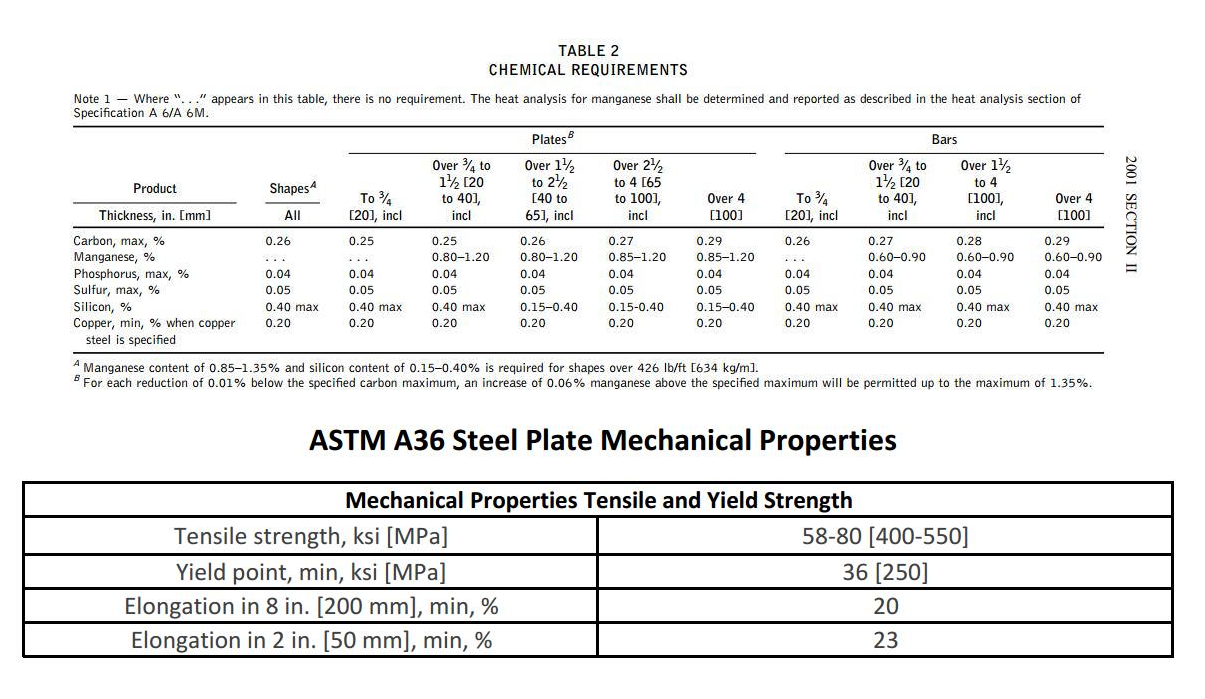
Now, for ASTM A36 steel, there’s a specific number we’re usually talking about when it comes to yield strength. And this is where the name comes from, in a roundabout way! The minimum specified yield strength for A36 steel is 36,000 pounds per square inch (psi). You might also see it expressed as 250 megapascals (MPa), which is just another way of measuring pressure.
So, that means a one-square-inch piece of A36 steel can handle a load of up to 36,000 pounds before it starts to permanently bend or stretch. That’s a LOT of weight, right? Imagine trying to lift 36,000 pounds! It’s a testament to the power of these materials we use every day without even thinking about it.
It’s important to remember this is a minimum value. Some A36 steel might actually be a bit stronger than that, but it’s guaranteed to meet at least 36,000 psi. This is crucial for engineers because they need to design based on reliable, predictable properties. They can’t just hope the steel is really strong; they need to know it’s at least this strong.
Why Does Yield Strength Matter So Much? The "Don't Bend My Bridge!" Rule
So, why is this yield strength thing such a big deal in the engineering world? Well, think about that bridge again. Nobody wants a bridge that starts to sag and permanently deform under the weight of traffic, do they? That would be… inconvenient, to say the least, and potentially catastrophic. Engineers design structures to operate within their elastic limits, meaning they want the steel to be able to return to its original shape after the load is removed.
The yield strength is the key indicator of this limit. It tells engineers how much load a steel component can take before it starts to permanently change its shape. This is fundamental to ensuring safety and longevity in any structure.
If a steel member were to exceed its yield strength, it would begin to deform permanently. This deformation could lead to a reduction in the load-carrying capacity of the structure, potentially causing a chain reaction of failures. So, it's not just about preventing things from snapping; it's about preventing the dreaded "permanent bend."
Imagine you're designing a shelf to hold a bunch of heavy books. You wouldn't want it to sag permanently after a few weeks, right? You’d want it to spring back to being perfectly straight when you remove the books. The yield strength is the property that tells you how much weight the shelf material can take before it starts to give up and permanently sag.
Beyond Yield Strength: The Whole Picture
Now, while yield strength is a super important metric for ASTM A36 steel, it's not the only thing that matters. It’s like knowing someone’s height doesn’t tell you everything about them. There are other properties that contribute to the overall performance of the steel.
For example, there’s the tensile strength. This is the ultimate stress the steel can withstand before it breaks. It's usually higher than the yield strength. So, steel might yield (permanently bend), but it can still take on more stress before it actually fractures.
Then there’s ductility. This refers to how much a material can deform before it breaks. Steel with good ductility can stretch quite a bit before fracturing, which is a good thing! It means it’ll give you some warning before it fails, rather than just snapping suddenly.

And let’s not forget about the modulus of elasticity, which tells you how stiff the material is – how much it deflects under a given load within its elastic range. A stiffer material will bend less.
For A36 steel, the typical tensile strength is around 58,000 to 80,000 psi, and it’s known for having good ductility. These combined properties make it a versatile and reliable choice for a wide range of applications.
The Irony: Why "Old" Steel Can Still Be "New" Enough
There’s a bit of an ironic twist here, isn’t there? We’re talking about a steel specification that’s been around for ages, yet it’s still incredibly relevant and widely used. It’s not like fashion where last season’s trends are completely out. A36 steel is like that classic pair of jeans – comfortable, dependable, and still looks good.
Part of the reason for its longevity is its balance of properties and cost-effectiveness. While there are newer, higher-strength steels out there (like A572 or A992, which offer even higher yield strengths), A36 often hits the sweet spot for many applications. It’s strong enough for a huge variety of structural needs, and it doesn’t break the bank.
Think of it this way: if you're building a skyscraper, you might opt for a higher-strength steel to reduce the weight of the structural elements and allow for taller designs. But for a smaller building, a warehouse, or a decorative metal staircase, A36 might be perfectly adequate and significantly more economical. It’s about choosing the right material for the job, and A36 often fits the bill.
![Carbon Steel ASTM A36 Properties [17] | Download Scientific Diagram](https://www.researchgate.net/publication/361693025/figure/tbl3/AS:11431281099617279@1669285830132/Carbon-Steel-ASTM-A36-Properties-17.png)
The "Real World" Implications: What Does 36,000 psi Mean for You?
So, you might be thinking, "Okay, this is all well and good, but what does this 36,000 psi actually mean for me, the average person who isn't designing bridges?" Well, it means that the buildings you walk into, the cars you drive (some components, anyway!), and the infrastructure around you are built on these foundational material properties.
It means that the steel beams supporting your local grocery store are designed with this yield strength in mind, ensuring they can handle the weight of the roof, the inventory, and all the shoppers. It means that when you cross a bridge, the steel structure beneath you is engineered to withstand far more than just your car.
It’s the unseen strength, the quiet reliability of materials like ASTM A36 steel, that allows our modern world to function. It’s a reminder that even the most complex engineering marvels are built upon fundamental principles of material science and well-defined specifications.
In Conclusion: The Enduring Strength of A36
So, there you have it. ASTM A36 steel, with its humble yet mighty minimum yield strength of 36,000 psi, is a true titan of the structural steel world. It’s a testament to smart engineering and the reliable performance of materials that have stood the test of time.
From those old bridges to modern construction projects, A36 continues to be a go-to choice for its balance of strength, ductility, and affordability. It’s a material that whispers, "I’ve got this," and for the most part, it absolutely does.
Next time you see a sturdy steel structure, take a moment to appreciate the science behind it. And if it’s an older structure, there’s a good chance that a solid chunk of ASTM A36 steel is playing a starring role, holding it all together, just as it was designed to do, with a yield strength that’s more than just a number – it’s a promise of stability.