
Orion Short Tube 80mm Refractor Telescope
Ever found yourself staring up at the night sky, feeling that familiar tug of wonder? That cosmic curiosity that whispers tales of distant worlds and ancient starlight? If you’re nodding along, then it might be time to bring a little more of that magic down to Earth, or rather, just a little bit higher. We're talking about dipping your toes into the stellar waters of amateur astronomy, and for that, we’ve got a charming little gateway drug: the Orion Short Tube 80mm Refractor Telescope. Think of it as your personal, portable portal to the cosmos, designed for the delightfully curious and the comfortably casual stargazer.
This isn't about lugging around massive, intimidating equipment that requires a PhD in optics to operate. No, sir. The Orion ST80 (as it's affectionately known by those in the know) is all about accessibility, simplicity, and that pure, unadulterated joy of seeing something more than just twinkling dots. It’s the telescope equivalent of a perfectly brewed cup of coffee on a crisp morning – easy to enjoy, surprisingly rewarding, and makes the everyday feel a little bit extraordinary.
So, what exactly is this little powerhouse? At its heart, it’s a refractor telescope. That’s a fancy way of saying it uses lenses, rather than mirrors, to gather and focus light. The "80mm" refers to the diameter of its main objective lens. This might sound small compared to some of the behemoths you see in professional observatories, but for a portable scope, 80mm is a sweet spot. It’s enough to reveal a surprising amount of detail without making the telescope itself a burden to carry. And “Short Tube”? Well, that’s pretty self-explanatory. It’s compact, which means less fumbling in the dark and more time spent gazing.
Unboxing Your Cosmic Companion
Let’s be honest, unboxing something new is always a thrill. With the Orion ST80, that thrill is amplified by the promise of what lies beyond our atmosphere. Often, you’ll find the telescope tube itself, perhaps a basic finder scope (a small, low-magnification scope to help you aim), and a diagonal mirror or prism that allows you to look sideways, making observing more comfortable. It’s usually a pretty straightforward affair, designed for ease of use right out of the box. No need to spend hours with an instruction manual that reads like a technical manual for a spaceship.
The beauty of the ST80 is its plug-and-play nature. You can literally take it out, attach a decent eyepiece (which might be included, or you might want to invest in a few), point it at the sky, and start exploring. It’s the perfect antidote to a day spent glued to screens; a gentle nudge to reconnect with the vastness that’s always overhead, waiting to be discovered.
Think of it like this: you wouldn't start your culinary journey with a Michelin-starred tasting menu. You'd start with something delicious and approachable, like a perfectly grilled cheese. The ST80 is that perfectly grilled cheese of telescopes. It’s satisfying, comforting, and opens the door to bigger, more complex flavors (or, in this case, celestial sights).
What Can You Actually See?
This is where the real magic happens. With an 80mm refractor, you're not going to be seeing alien civilizations or the faint glow of distant galaxies with the naked eye (sorry to burst that bubble!). But what you will see is utterly captivating. Prepare to have your mind gently blown.
Let’s talk about the Moon. Oh, the Moon! Through the ST80, it’s no longer just a flat, glowing disc. You’ll start to see craters, mountains, and valleys in astonishing detail. It’s like peering through a window at a desolate, yet beautiful, alien landscape. You can spend hours just tracing the terminator – that ever-shifting line between sunlight and shadow – where the contrast is highest and the surface features pop out the most. It’s a truly immersive experience, and one that never gets old. Imagine having your own personal lunar tour guide, available every night!
Then there are the planets. Jupiter, for instance, becomes a banded world. You’ll be able to make out its prominent stripes and, with a bit of luck and a good eyepiece, even spot its four largest moons – the Galilean moons – dancing around it like tiny pearls. Seeing these moons, named Io, Europa, Ganymede, and Callisto, is a direct connection to history, as Galileo himself first observed them over 400 years ago. Talk about a cultural connection happening right in your backyard!
Saturn, the jewel of our solar system, will reveal its magnificent rings. While they might not appear as wide and distinct as in Hubble images, the fact that you can clearly see them with a relatively small telescope is still a profound moment. It’s like glimpsing the universe’s most iconic jewelry box. You might even catch a hint of the Cassini Division, that dark gap within the rings, a testament to the exquisite detail available.
Mars, depending on its position in its orbit, can show hints of its surface features, like dark patches that hint at geological formations. Venus, with its thick cloud cover, will appear as a brilliant crescent, a beautiful celestial body that reminds us of the ever-changing dance of our solar system.
But it’s not just planets. The Orion ST80 is also fantastic for observing star clusters. The Pleiades, often called the Seven Sisters, becomes a glittering swarm of diamonds scattered on black velvet. The Beehive Cluster (M44) transforms from a fuzzy smudge to a dazzling collection of thousands of stars. These clusters are stellar nurseries, vast collections of stars born at roughly the same time from the same giant cloud of gas and dust.
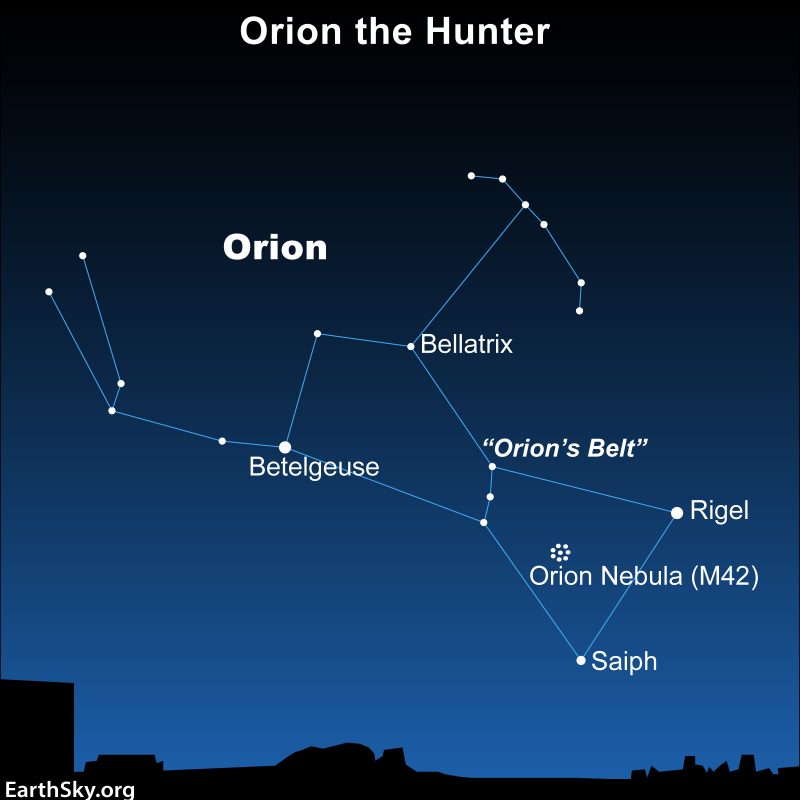
And let’s not forget nebulae! While fainter deep-sky objects will require darker skies and perhaps a bit more patience, you can still glimpse the fuzzy glow of larger, brighter nebulae like the Orion Nebula (M42) – a truly spectacular sight. This is where stars are born, a cosmic cloud of gas and dust illuminated by the intense radiation of young, hot stars within. It’s a direct view into the universe’s creative processes.

Making the Most of Your ST80: Practical Tips for the Relaxed Stargazer
So, you’ve got your telescope. Now what? Here are a few pointers to ensure your stargazing adventures are as enjoyable as possible:
Find Your Spot (and Keep it Simple)
You don’t need to be in a remote desert observatory. While light pollution from cities can be a challenge, even a moderately light-polluted backyard can offer plenty of wonders with the ST80. The key is to find the darkest patch of sky you can access. Avoid pointing directly at streetlights or house lights. A park or an open field a little way out of town is ideal if you have the opportunity.
Remember, the ST80 is portable. Take it to a friend's house, a local park on a clear night, or even just your backyard. The less hassle involved, the more likely you are to actually use it. Think of it as an impromptu adventure kit.
Eyepieces: Your Ticket to Magnification
While the ST80 might come with a basic eyepiece, investing in a couple of good ones can dramatically improve your viewing experience. For general viewing, a 25mm eyepiece is a great starting point, offering a wider field of view and lower magnification, which is easier to find and more stable. For brighter objects like the Moon and planets, a shorter focal length eyepiece (like a 10mm or 6mm) will give you higher magnification and reveal more detail.
Don’t go overboard with super high magnifications initially. Too much magnification can make the image blurry and difficult to hold steady, especially if you're not using a sturdy mount. Start with what gives you a clear, enjoyable view. It’s like enjoying a good book before diving into a complex philosophical text.
Mount Up! (Without Breaking a Sweat)
A stable mount is crucial for enjoyable stargazing. A wobbly telescope is like trying to read a book with shaky hands – frustrating and blurry. The ST80 is often sold with a basic alt-azimuth mount, which is simple to use. For a more refined experience, consider a sturdier alt-azimuth mount or even a small equatorial mount if you want to delve into astrophotography later on (though that’s a whole other adventure!).
Even a sturdy tripod can make a world of difference. Look for something that feels stable and allows for smooth movements. You want to be able to gently nudge the telescope to follow celestial objects as they drift across the sky.
Dark Adaptation: Let Your Eyes Adjust
This is a big one. Your eyes need time to adapt to the darkness to see fainter objects. Give yourself at least 20-30 minutes in complete darkness before you expect to see subtle details. Avoid looking at your phone or any bright lights during this period. If you need light, use a red flashlight; the red light has less impact on your night vision.
Think of it like your body adjusting to a new environment. The more you allow yourself to be immersed in the darkness, the more your senses will tune into the subtle wonders of the night sky. It’s a form of mindful observation.
Know What You're Looking At
Having a star chart or a stargazing app on your phone (used with a red light filter, of course!) can be incredibly helpful. It’s much more satisfying when you can identify what you're seeing. Learning the constellations is like learning the neighborhoods of the sky. You'll start to recognize patterns and landmarks, making your exploration more intentional and rewarding.
Apps like SkySafari, Stellarium, or Star Walk are fantastic tools. They can show you what’s visible from your location at any given time, point you towards interesting objects, and provide information about them. It's like having a knowledgeable guide in your pocket.
Patience and Persistence: The Stargazer's Virtues
Some nights will be clearer than others. Some objects will be easier to find than others. That’s part of the charm. Don't get discouraged if you don't see everything on your first try. Stargazing is a journey, not a destination. The more you practice, the better you'll become at finding your way around the celestial sphere.
It’s about embracing the process. Some nights might be more about the quiet contemplation of the Moon, others about the thrill of spotting a faint smudge that turns out to be a distant galaxy. Each experience is valuable.
A Little Fun Fact for Your Next Star Party
Did you know that the light you see from stars has been traveling for years, decades, or even centuries? When you look at Jupiter, you’re seeing light that left it about 40 minutes ago. But when you gaze at the Andromeda Galaxy (which the ST80 can show as a fuzzy patch), you’re seeing light that left it 2.5 million years ago! You are literally looking back in time. How cool is that? It’s a cosmic time machine you can set up in your backyard.
The Orion ST80 isn't just a telescope; it's a conversation starter. It’s a tool for connection – with the universe, with nature, and even with fellow stargazers. Imagine hosting a backyard “star party” with friends, sharing the wonder of Jupiter’s moons or the rings of Saturn. It’s a chance to step away from the everyday hustle and reconnect with something much bigger and much older than ourselves.
The Reflection: Connecting the Cosmos to Our Daily Lives
There's a certain humility that comes with looking at the vastness of space. Our daily worries, our to-do lists, the minutiae of our lives – they all shrink a little when you’re contemplating the immense scale of the universe. The Orion Short Tube 80mm Refractor, with its ease of use and surprising capabilities, offers a perfect, accessible entry point to this profound experience.
It reminds us that even with a relatively simple tool, we can access incredible beauty and deep wonder. It encourages us to look up, to be curious, and to appreciate the extraordinary that exists beyond our immediate surroundings. In a world that often feels chaotic and overwhelming, the quiet, steady presence of the stars, made visible through a humble telescope, can be a grounding and inspiring force. It’s a gentle invitation to pause, to breathe, and to marvel at the incredible universe we inhabit.