
Meade Lightbridge Deluxe 16 Inch Truss Tube Dobsonian Telescope

I remember the first time I truly saw Jupiter. Not just a bright, slightly fuzzy dot, but a tiny, distinct orb with faint bands of color and, if I squinted just right (and maybe had a little luck with the seeing conditions), I could swear I saw Europa peeking out. I was maybe 10, peering through my dad’s old department store telescope, a wobbly thing that made observing anything past the moon feel like a feat of extreme patience and good humor. It was magical, of course. But it was also… a tease. A tantalizing glimpse of the wonders that lay just beyond reach. Little did I know, years later, I’d be staring at that same gas giant, and it would look like it was hanging right there in my backyard, begging me to count its moons.
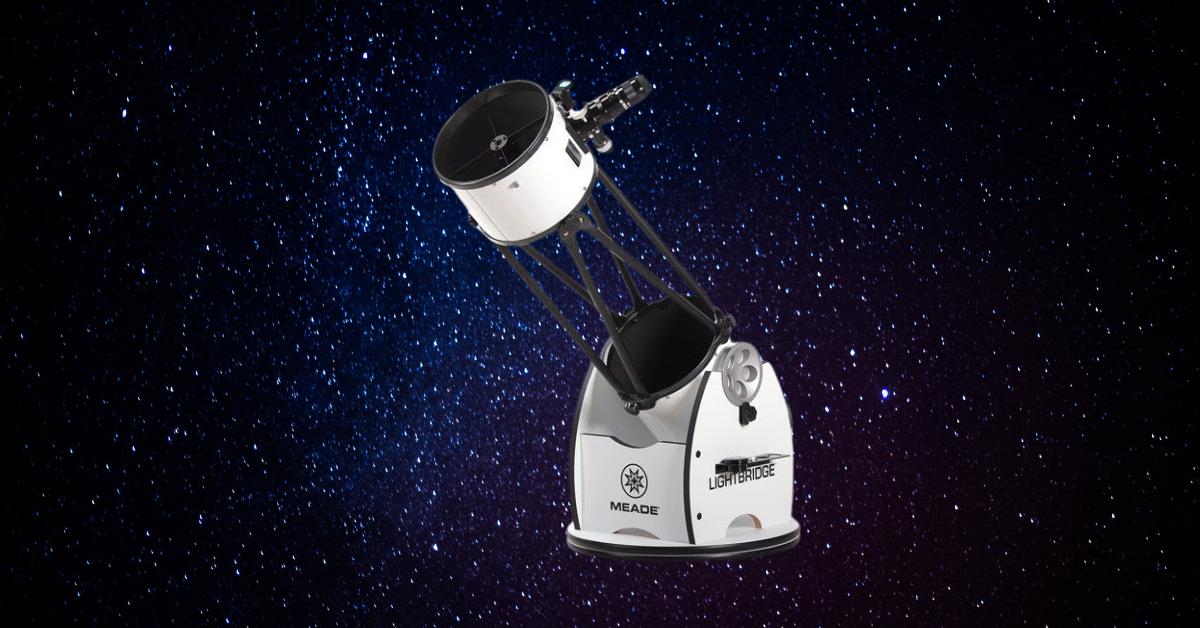
That brings me to the beast, the legend, the one and only Meade Lightbridge Deluxe 16 Inch Truss Tube Dobsonian Telescope. Yeah, I know. The name alone sounds like something out of a sci-fi epic. And honestly? Looking at it, you’d be forgiven for thinking it’s some kind of terrestrial landing craft. This isn't your granddad's backyard toy; this is a serious piece of optical equipment designed to punch way above its weight class, and then some.
Let’s be real, folks. We all start somewhere, right? We get that first telescope, that little refractor or a basic reflector, and we’re hooked. We spend hours under the stars, marveling at the craters on the Moon, maybe spotting Saturn’s rings as a faint cigar band. But then, if you’re like me, you get that itch. That itch for more. More light. More detail. More wow. You start looking at those big, beautiful images online, the ones that show nebulae as swirling clouds of color and galaxies as vast, intricate cities of stars. And you think, “How on earth do they do that?” Well, a big chunk of the answer, my friends, lies in aperture. And when we talk about aperture, we’re talking about the diameter of the main mirror or lens. It’s the light-gathering power, the resolution, the sheer capability of the instrument.
The Lightbridge Deluxe 16 Inch, as the name so helpfully suggests, boasts a massive 16-inch primary mirror. Sixteen. Inches. That’s… a lot of glass. It’s like the difference between peeking through a keyhole and throwing open the grand double doors to the universe. Suddenly, those faint smudges you’ve been trying to resolve into galaxies become distinct, structured objects. Jupiter’s Great Red Spot? You’ll see it. Saturn’s Cassini Division? It’ll be as clear as day. And the deep sky objects… oh, the deep sky objects. Nebulae that were once just faint grey patches transform into glowing, ethereal clouds. Galaxies that you could barely discern will reveal their spiral arms and intricate structures. It’s a revelation, truly.
Size Matters, or Why 16 Inches is a Big Deal
So, why is all this aperture such a game-changer? Think of it like this: your telescope is a bucket trying to catch light from faint celestial objects. A bigger bucket catches more light. Simple, right? But it’s more than just brightness. A larger mirror also means better resolution. This is the ability to distinguish fine details. With a 16-inch mirror, you’re talking about resolving power that’s approaching the theoretical limits of what’s possible with ground-based observation. You’re essentially getting closer to what Hubble sees, albeit without the atmospheric distortion (and that’s a whole other can of worms).
And let’s not forget the Dobsonian mount. If you’re new to this, a Dobsonian is a type of telescope mount that’s notoriously simple, robust, and incredibly effective for large-aperture Newtonian reflectors. It’s basically a ground-based mount that allows the telescope to move up-down (altitude) and left-right (azimuth). No complicated gears, no tracking motors (though some high-end ones do offer GoTo capabilities, which we’ll get to). It's pure, unadulterated pointing and observing. And for a 16-inch scope, that’s crucial. This isn't a scope you're going to be waltzing around with. It’s a dedicated observing instrument.
The "Deluxe" Factor: What Sets This Bird Apart?
Now, about that "Deluxe" part. Meade didn't just slap a bigger mirror on a standard Dobsonian. They put some serious thought into making this a more user-friendly, albeit still substantial, experience. One of the biggest innovations with the Lightbridge series, and a key feature of the Deluxe, is the truss tube design. What does that even mean? Well, instead of a solid, one-piece tube (which would be impossibly unwieldy for a 16-inch scope), it’s constructed with a series of aluminum trusses that connect the primary mirror cell to the secondary mirror spider and focuser assembly. The entire thing then telescopes down for transport and storage.

Why is this so great? For starters, portability. Okay, let’s be honest, a 16-inch telescope is never going to be truly portable in the same way a 4-inch refractor is. But compared to a solid-tube 16-inch Dobsonian, the truss design makes it significantly more manageable. You can break it down into sections that will fit into a car. It still requires some effort, mind you. You’re going to need a decent-sized vehicle and a willing accomplice (or two) to get it to a dark sky site. But it’s not an insurmountable obstacle for the dedicated amateur astronomer.
Another advantage of the truss tube is better air flow. With a solid tube, air inside can get stagnant, leading to thermal currents that can degrade image quality, especially early in an observing session. The open truss design allows air to move more freely, helping the optics to cool down faster and reducing those pesky internal air currents. So, your views stabilize quicker. Huzzah!
The "Deluxe" model also typically comes with some upgraded accessories that make a real difference. Think better eyepieces, a more robust focuser (crucial for precise focusing with such high magnification capabilities), and sometimes even a built-in cooling fan for the primary mirror. These aren't just nice-to-haves; they are features that enhance your observing experience and help you get the most out of that massive mirror.
Putting it Together: The Assembly Tango
Okay, let’s talk about setting this thing up. If you’re buying a 16-inch telescope, you’re probably not expecting to have it ready to go in five minutes. And you’d be right. Assembly of a truss tube Dobsonian is a bit of a ritual. It's like building a miniature observatory in your backyard. You’ve got the base rocker box, the mirror cell, the trusses to attach, the secondary spider, the focuser, and then the optical tube assembly that slides down.
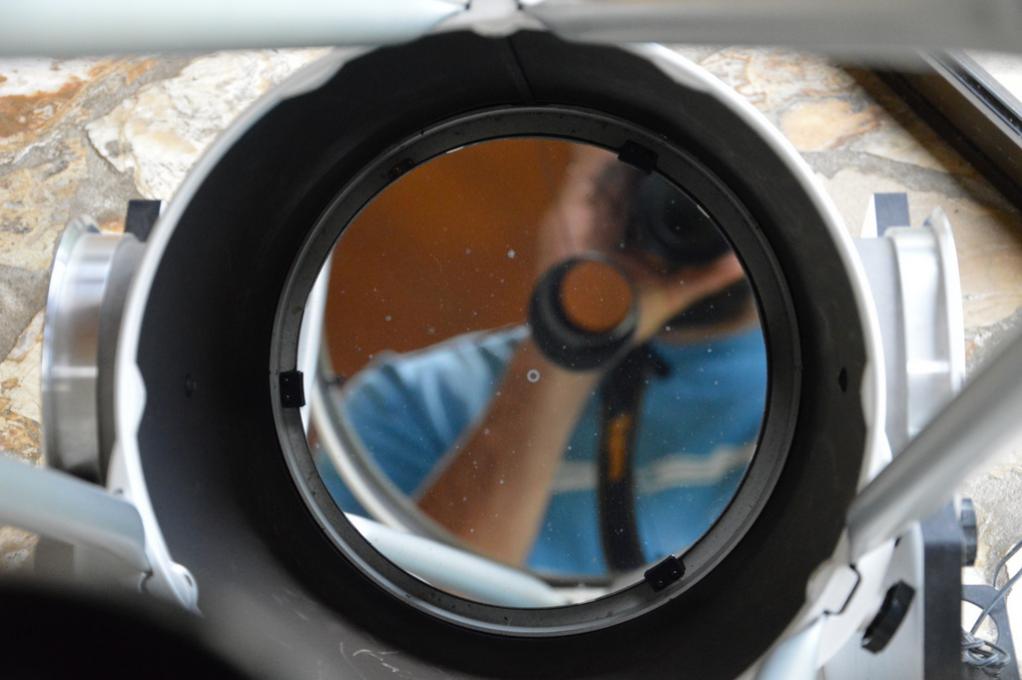
Meade has generally done a good job of making the process relatively straightforward, but it still takes time and a bit of patience. You’re going to want to read the instructions thoroughly, maybe even watch a few YouTube videos beforehand. It’s not rocket science, but it’s also not assembling IKEA furniture with just an Allen wrench. Think of it as a pre-game ritual. The more time you invest in setting it up correctly, the more rewarding your observing sessions will be.
And once it’s set up? It’s a magnificent sight. It’s tall. It’s imposing. It’s a gateway. You’ll feel like a mad scientist or a seasoned explorer about to embark on a grand voyage. It’s intimidating, yes, but in the best possible way. It commands respect, and it promises incredible rewards.
The View Through the Looking Glass (or Mirror, Rather)
Now for the part you’ve all been waiting for: what’s it like to look through it? Imagine standing under a truly dark sky. No light pollution, no annoying streetlights, just the vast canvas of the cosmos. You point the Lightbridge Deluxe at the Andromeda Galaxy. What you see isn’t just a faint, fuzzy patch. You see its structure. You can trace the spiral arms, discern brighter core regions, and maybe even pick out some of the satellite galaxies. It’s breathtaking.
Let’s talk planets. Jupiter will be a disc. You’ll see the banding, the zones and belts, and the Great Red Spot will likely be a prominent feature. The Galilean moons won’t be just pinpricks; you might even be able to see some of their relative sizes. Saturn will reveal its rings, and the Cassini Division will be easily visible. You can even start to discern some of the darker belts on the planet itself. It’s like having a high-definition television for the solar system.
But the real magic, for me, lies in the deep sky. Globular clusters, those ancient balls of hundreds of thousands of stars, will resolve into individual star points right down to their cores. Nebulae like the Orion Nebula will explode into detail, showing delicate filaments of gas and dust. Even fainter, more distant galaxies will begin to reveal their shapes and textures. It’s a sensory overload, in the most glorious sense of the word.
Who is This Telescope For? (Hint: It’s Probably Not for Beginners)
Let’s be brutally honest here. The Meade Lightbridge Deluxe 16 Inch is not a beginner’s telescope. If you’re just dipping your toes into astronomy, something smaller and more manageable is probably a better starting point. This is a telescope for the serious amateur astronomer who has outgrown their current equipment and is ready to invest in something truly spectacular. You need to be comfortable with its size, its assembly, and the commitment it requires.
However, if you are that amateur, if you’ve spent years honing your skills, and if you crave that next level of detail and light-gathering power, then this telescope is an absolute contender. It offers incredible value for its aperture. You’re getting a premium viewing experience without the astronomical price tag of some other large-aperture options.
It’s also a telescope that rewards patience and dedication. It’s not a grab-and-go instrument. It requires setup, time to cool down, and good observing conditions. But for those who are willing to put in the effort, the rewards are immeasurable. It's about the journey, not just the destination, and with this telescope, the journey is as awe-inspiring as the views themselves.

A Few Caveats to Consider (Because Nothing is Perfect)
Now, before you go selling your car to fund this optical dream, let’s touch on a few practicalities. As I’ve mentioned, size and weight are significant. Even with the truss design, it’s a big piece of equipment. You'll need storage space. You'll need a vehicle capable of transporting it. And you’ll likely need assistance with setup. This isn't a balcony telescope unless your balcony is the size of a football field.
Collimation is also a factor. With a 16-inch mirror, keeping it perfectly aligned (collimated) is crucial for optimal performance. This means learning how to adjust the mirrors using collimation tools. It’s not difficult once you get the hang of it, but it’s another skill to learn. Think of it as part of the astronomer’s toolkit.
And then there’s the cost. While it offers great value for its aperture, it’s still a significant investment. You’re looking at a price tag that reflects the quality of the optics and the engineering of the truss system. But consider the decades of incredible observing experiences you'll get from it. It's an investment in your passion, and for many, that's priceless.
The Verdict: Is the Meade Lightbridge Deluxe 16 Inch Worth It?
If you’re an experienced amateur astronomer looking for that ultimate leap in aperture and performance, and you're prepared for the logistical considerations, then the Meade Lightbridge Deluxe 16 Inch Truss Tube Dobsonian Telescope is an absolute winner. It offers an unparalleled view of the universe for its price point. It's a testament to what's possible with well-engineered optics and a clever design. It’s a telescope that will inspire awe, spark curiosity, and make you fall in love with the night sky all over again, even if you thought that was impossible.
It’s the kind of telescope that makes you want to join an astronomy club, travel to dark sky sites, and spend every clear night under the stars. It’s a commitment, yes, but one that pays dividends in cosmic wonder. So, if you’re ready to stop peeking through the keyhole and start throwing open those grand double doors, the Lightbridge Deluxe 16 Inch might just be your ticket to the stars.